The complete service
Clear work. Clear result.
Every visit starts with the property, assembly and notice details, not a one-size-fits-all assumption.
01Why a home may have a testable device
Not every house has a registered testable backflow preventer. Homes with irrigation, boilers, auxiliary water, larger service arrangements or specific cross connections may. The City notice, previous test tag or device model helps establish what is registered and why testing has been requested.
02What happens during the appointment
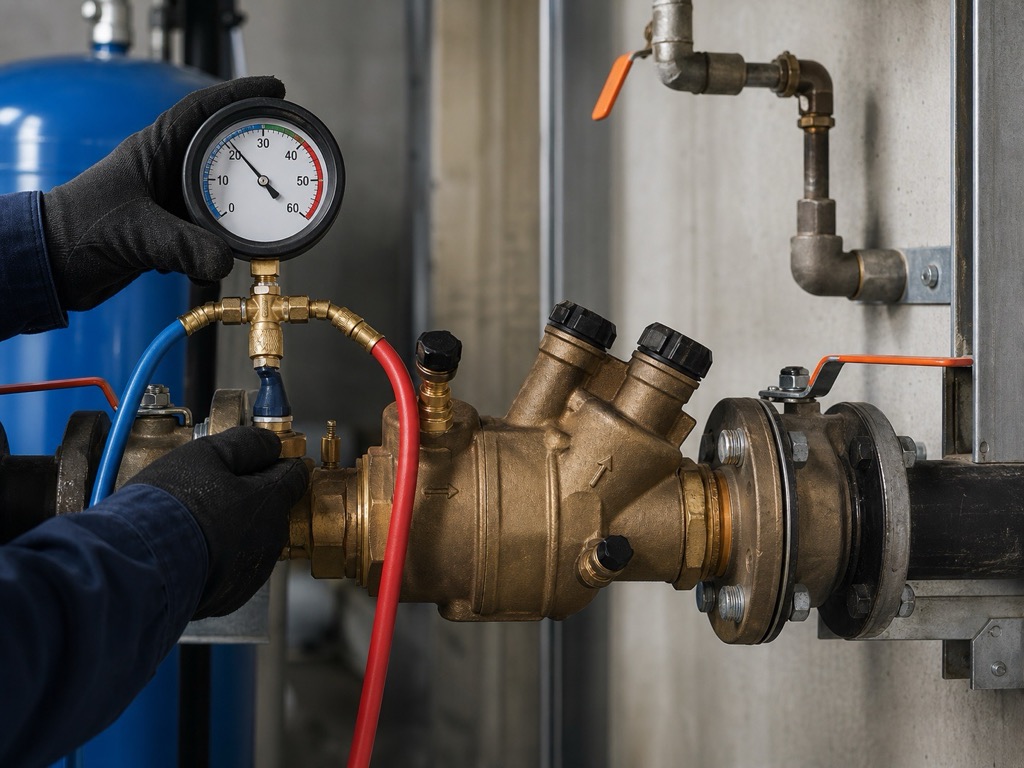
The tester identifies the assembly, confirms its condition and uses differential-pressure equipment to perform the field procedure for that device type. Water may need to be isolated briefly. The homeowner receives the result and, if the device fails, an explanation of the repair or replacement decision before additional work is approved.
03Prepare the access
Move stored items away from the device, unlock the mechanical or irrigation area and identify any household system that cannot be interrupted. Exterior devices should be visible and safe to reach. If the assembly is in a pit, crawlspace or concealed enclosure, send a photo before booking so the access can be assessed.
04The report belongs to the property
Municipal programs track the assembly at the address, not just the person who booked the test. Keep the notice, completed report and submission confirmation with home records. When ownership changes, that history helps the next owner understand the device and annual obligation.
05Avoid unverified certification claims
A polished website or the phrase “backflow specialist” is not proof that a tester meets the municipality’s current rules. Ask for the applicable certification, business licence and test-kit calibration where required. This website intentionally withholds first-person credential claims until the operating business supplies documentation.