The complete service
Clear work. Clear result.
Every visit starts with the property, assembly and notice details, not a one-size-fits-all assumption.
01Match protection to the hazard
Assembly selection depends on the cross connection, system use, hazard level and requirements of the authority having jurisdiction. A reduced-pressure assembly, double-check assembly or pressure-vacuum breaker is not interchangeable by preference alone. The design and permit path should be resolved before equipment is ordered.
02Make future testing possible
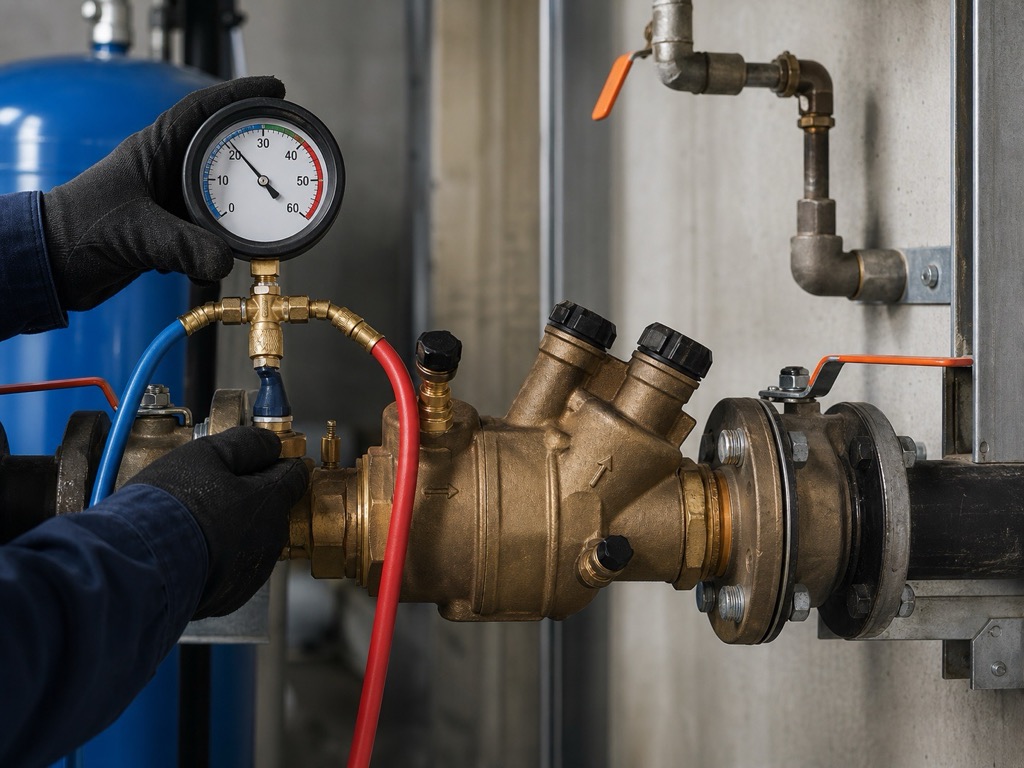
Annual testing requires access to test cocks, shutoffs and the assembly body. Installations also need appropriate orientation, support, drainage, freeze protection and working clearance. A compact installation that cannot be safely isolated or serviced creates avoidable cost every year afterward.
03Replacement and retrofit planning
Existing rooms and mechanical spaces often impose tighter constraints than new construction. The replacement must account for pipe size, flow demand, shutoff condition, drainage and service interruption. Where a device has failed repeatedly, the surrounding installation may be as important as the assembly itself.
04Permits, registration and first test
Municipal requirements can include a plumbing permit, device registration, an initial passing test and a property-specific report. For example, the Township of Langley states that new testable backflow preventer installations require plumbing permits. The quote should identify these administrative steps instead of hiding them after installation.
05Built for the property type
Installations can protect domestic water, irrigation, fire protection, process equipment and other cross connections. Commercial, strata, restaurant, agricultural and residential contexts have different access and shutdown considerations, so the proposed work is based on the actual system, not a generic device swap.