The complete service
Clear work. Clear result.
Every visit starts with the property, assembly and notice details, not a one-size-fits-all assumption.
01Test before the schedule gets busy
Exterior irrigation assemblies are often commissioned as watering resumes. Early spring booking leaves room for a failed check, a damaged shutoff or freeze-related problem without forcing a landscape schedule and compliance deadline into the same narrow window. The device should be accessible, pressurized as required and ready for safe isolation.
02PVB, RPBA and site conditions
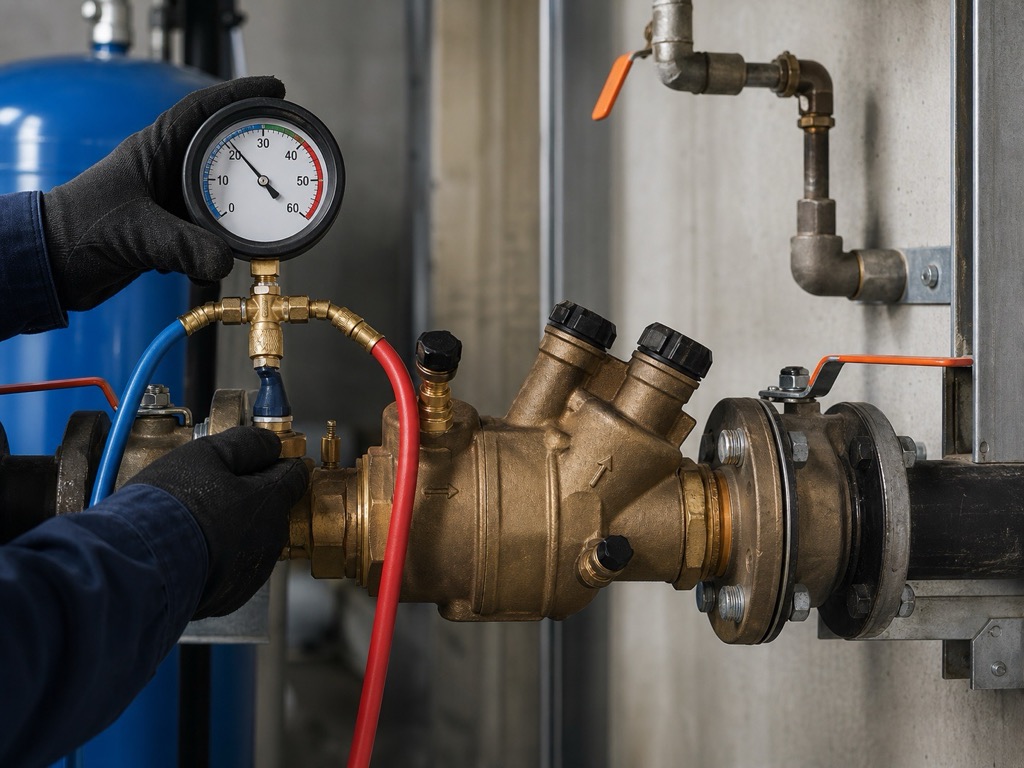
Irrigation systems may use pressure-vacuum breakers or reduced-pressure assemblies depending on design and hazard. Orientation, elevation, drainage and exposure affect performance. A photo showing the complete installation, rather than only the model tag, helps identify access and obvious condition issues before the visit.
03Winter damage is not always visible
A device can look intact while internal components or the body have been affected by freezing, debris or improper start-up. Field testing establishes whether the assembly actually meets its performance requirements. Persistent leakage, cracked castings and unreliable shutoffs may change a simple annual test into a repair or replacement assessment.
04Commercial landscape coordination
Strata, retail, institutional and multi-site properties often rely on a landscape contractor for system start-up. Testing should be coordinated with that schedule and with whoever controls keys or irrigation rooms. If water is not available or the assembly remains winterized, the tester may not be able to complete the field procedure.
05Reporting still follows the property city
An irrigation assembly is not exempt from municipal reporting because it is seasonal or outdoors. The portal, form, tester requirements and fee depend on the property address. Send the City notice or account number with the booking request so the correct administrative step is included.