The complete service
Clear work. Clear result.
Every visit starts with the property, assembly and notice details, not a one-size-fits-all assumption.
01Recognize the complete assembly
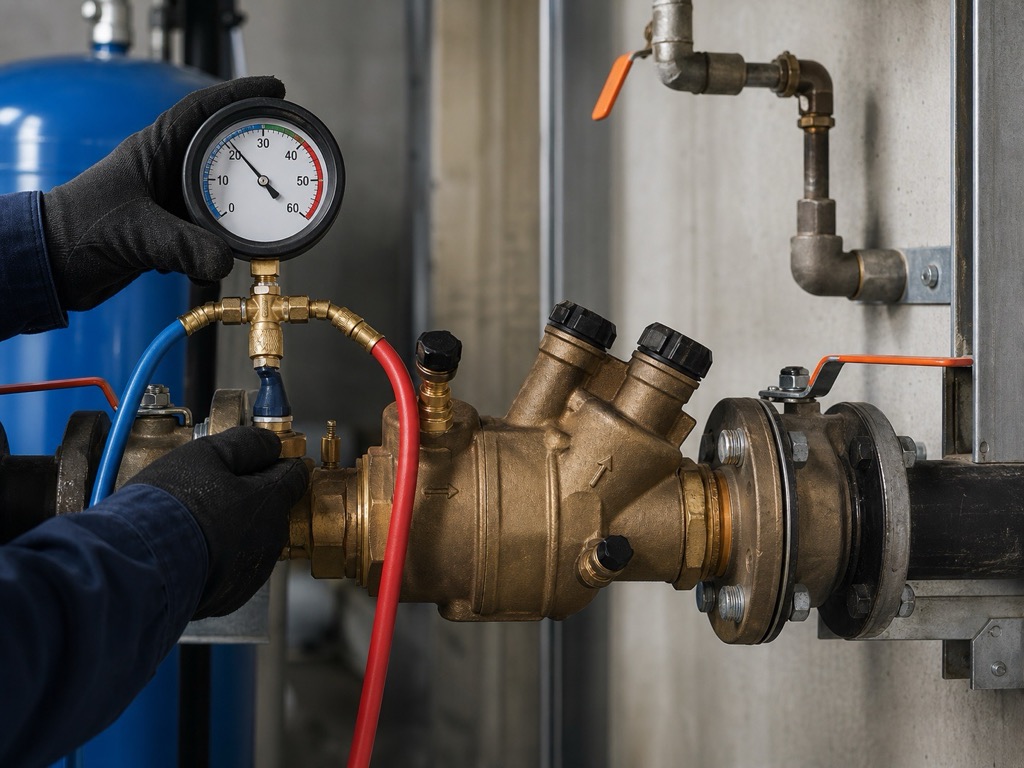
Detector assemblies can include a mainline device and a bypass meter assembly, each with its own testable components and reporting needs. The model, size and configuration should be confirmed before quoting. A wide photo of the entire installation and a close image of each tag are more useful than a single cropped gauge or valve image.
02Coordinate impairment and monitoring
Testing can require valve operation that affects the fire protection service or triggers supervisory signals. The building representative, fire alarm monitoring contact and any required impairment procedure must be identified before work begins. The tester’s role and the fire-protection contractor’s role should be explicit rather than assumed.
03Access and drainage matter
Large assemblies may be in dedicated rooms, exterior enclosures or constrained mechanical spaces. Reduced-pressure detector assemblies can discharge water through a relief valve, so adequate drainage and safe working clearance are important. Poor shutoff condition may also limit the ability to complete a valid test.
04A failure needs a controlled response
If a fire-line assembly fails, the building cannot treat the result like a low-priority cosmetic defect. The responsible contacts need the failure details, repair path and retest plan. Any service impairment should be managed under the property’s established fire protection procedures and applicable authority requirements.
05Report each device correctly
Detector configurations and bypass assemblies can require separate records. Surrey’s published standard, for example, treats the mainline and bypass devices in detector assemblies as separate testable devices. The current municipality’s form or portal determines how those records are submitted for the property.