The complete service
Clear work. Clear result.
Every visit starts with the property, assembly and notice details, not a one-size-fits-all assumption.
01Start with the failed readings
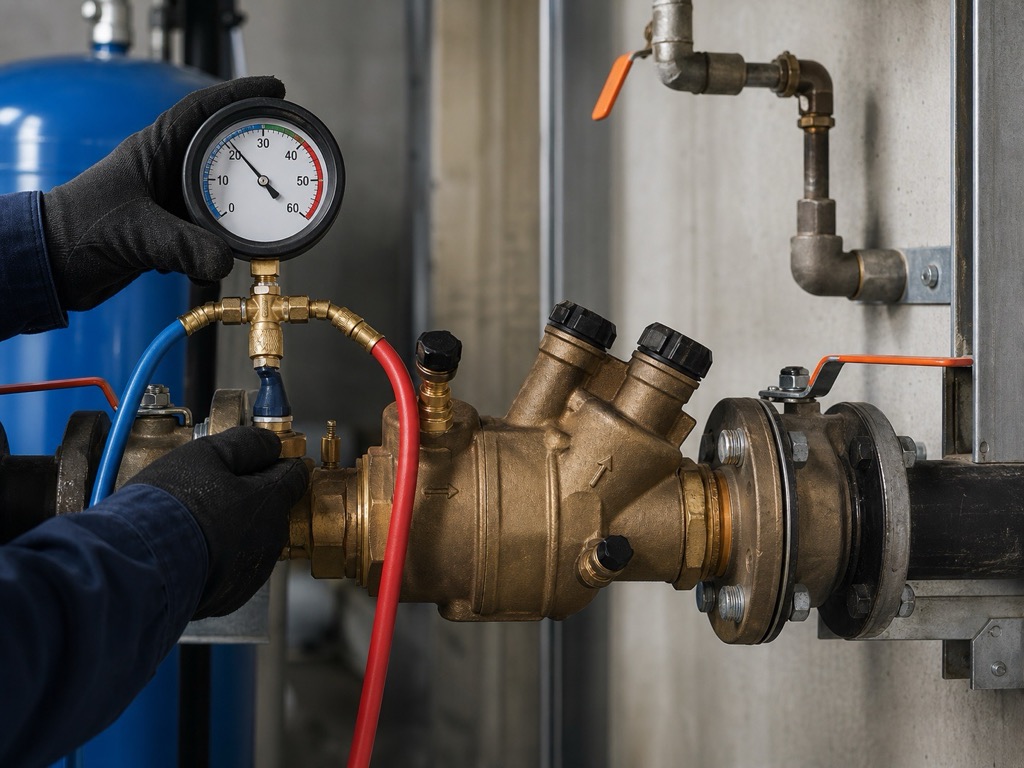
The first result indicates which part of the assembly did not meet the required performance. That information, together with the model, age, condition and service access, guides the repair assessment. This avoids replacing parts blindly and gives the owner a clearer decision before additional work begins.
02Repair when it is sensible
Many serviceable assemblies fail because of debris, worn rubber, damaged springs or fouled check and relief-valve components. When parts are available and the body is sound, cleaning or a manufacturer-matched repair kit may restore the device. The scope should be confirmed before work that changes the quoted price.
03Retesting proves the repair
A repair alone does not establish compliance. The assembly is tested again, the post-repair readings are documented and the result follows the reporting process for the property municipality. Failed and repaired-device handling differs between programs, so the address and notice remain important throughout the job.
04When replacement is the better call
Replacement may be more responsible when the assembly body is cracked, heavily corroded, freeze-damaged, obsolete, repeatedly failing or difficult to service. The objective is not the cheapest immediate action; it is a defensible path that protects the water system and avoids repeated labour on an unreliable device.
05Prevent the next avoidable failure
Accessible shutoffs, adequate drainage, freeze protection, correct orientation and regular maintenance all affect long-term performance. After the result is known, practical site issues can be identified so the next annual test is less likely to become an emergency repair.