The complete service
Clear work. Clear result.
Every visit starts with the property, assembly and notice details, not a one-size-fits-all assumption.
01What the test checks
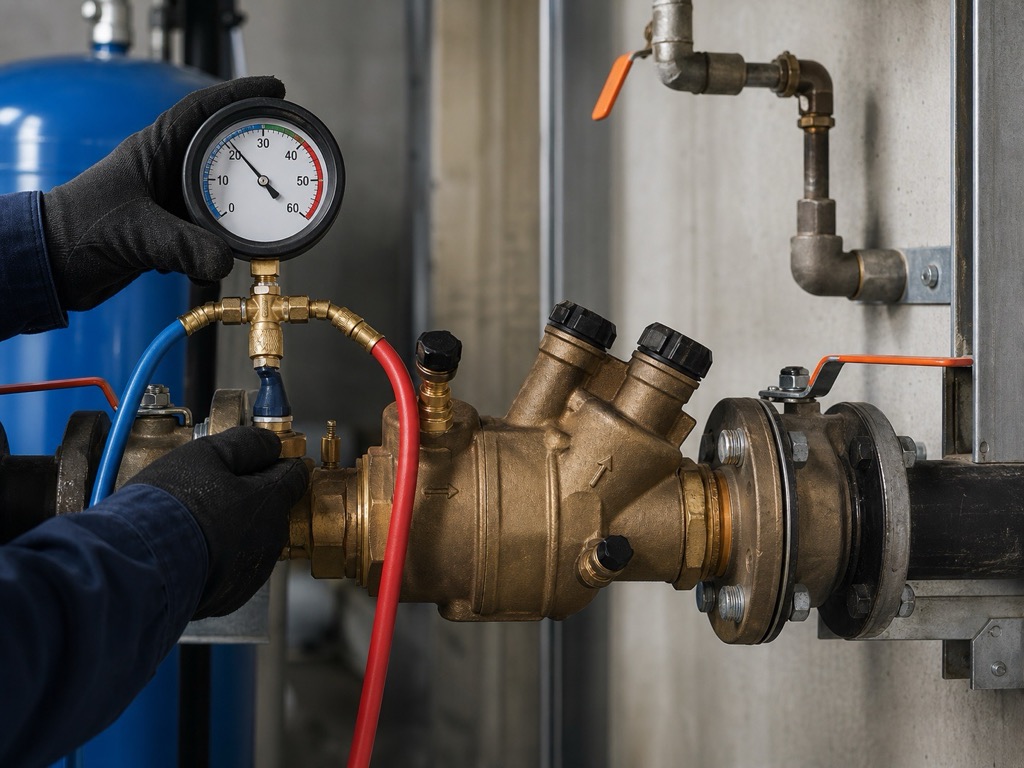
Testing verifies whether the internal checks, relief valve or air-inlet components operate within the accepted performance requirements for that assembly type. Readings are taken with calibrated test equipment and recorded against the device make, model, serial number and location. The result is pass, fail or unable to test, never a vague visual opinion.
02Annual testing and certification
Municipal programs commonly require testable backflow preventers to be tested annually and after installation, repair, replacement or relocation. The completed test report is the compliance record. Because tester eligibility varies by municipality, property owners should verify current BCWWA certification, business licensing and test-kit calibration before authorizing any provider.
03Municipal report filing
The form, portal, account number, deadline and fee are not the same everywhere. Surrey uses an online portal for registered devices; Abbotsford publishes its own assembly test report; the Township of Langley directs annual reports through its engineering program. We confirm the address-specific route in the quote so the administrative work is visible from the start.
04If the assembly fails
A failed result identifies a performance problem; it does not automatically mean the entire device needs replacement. Worn seals, debris, springs, check components, relief-valve parts and shutoff issues are common causes. The next step is a repair assessment followed by a retest. Replacement is considered when the body is damaged, obsolete or uneconomical to rebuild.
05Properties and devices
Testing applies across commercial buildings, strata properties, restaurants, irrigation systems, fire protection services, industrial sites and some residential systems. Common assemblies include RPBA, DCVA, PVB, RPDA and DCDA configurations. The property notice or a clear device photo usually provides enough information to start an accurate quote.